Ghana

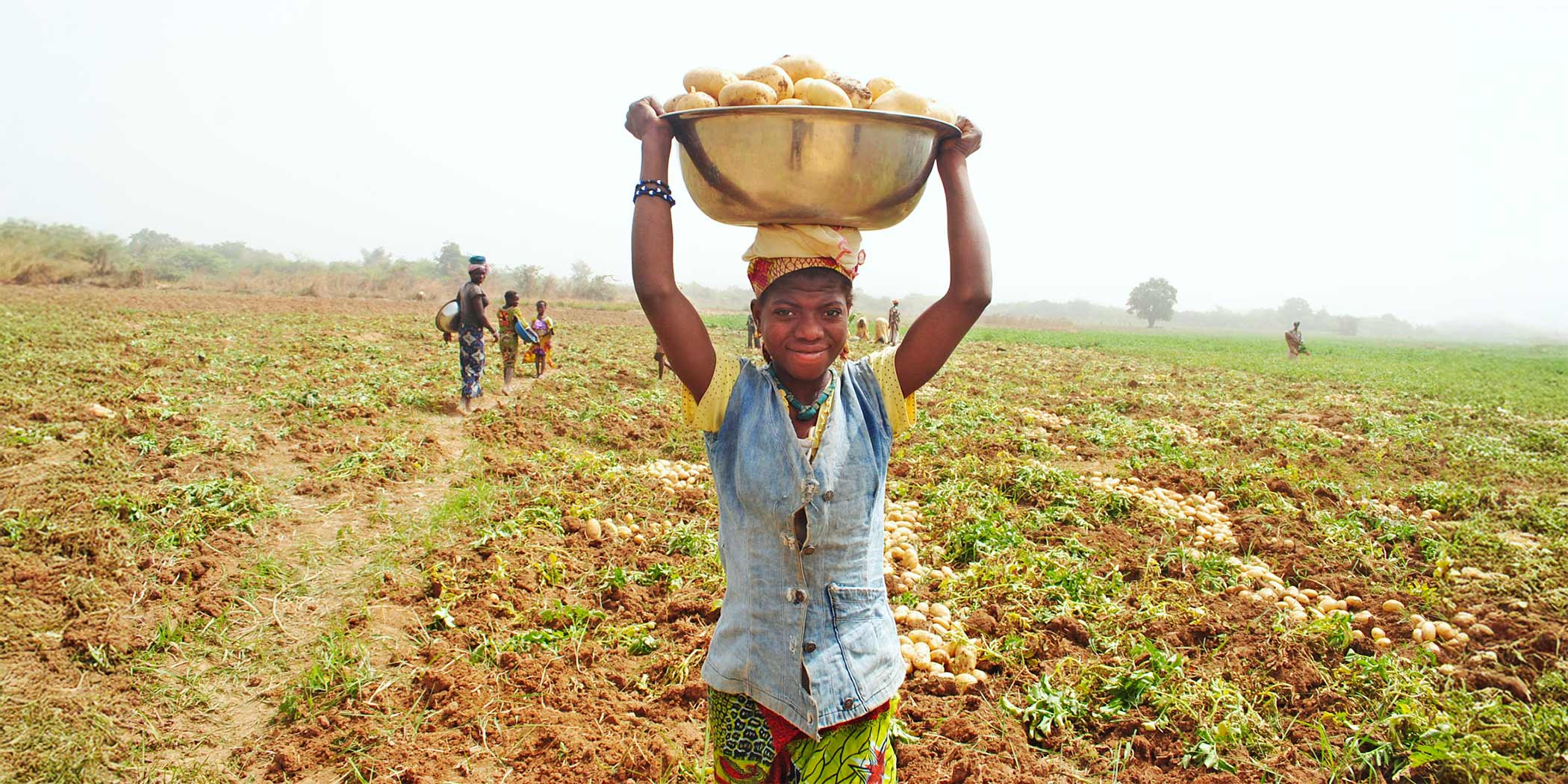
Ghana is located in West Africa, between Côte d’lvoire (Ivory Coast) and Togo. The country’s total land area is 238,533 sq km. In comparison, it is slightly larger than Romania, or about the size of the state of Oregon in the U.S. The country’s climate is tropical: warm and relatively dry along the southeast coast; hot and humid in the southwest; hot and dry in the north. Environmental issues facing the country include recurrent drought in the north, lack of potable water, deforestation, overgrazing, soil erosion and water pollution. Of the total land area, 17 percent is utilized for cultivated crops, while another nine percent supports permanent crops such as fruit- and nut-bearing trees. The country’s economy continues to focus on agriculture, which accounts for 35 percent of GDP and employs 56 percent of the work force (primarily smallholder farmers). Gold and cocoa are the country’s primary exports, and are the largest contributors to GDP. Ghana signed the Millennium Challenge Corporation (MCC) Compact in 2006, which aims to assist in transforming Ghana's agricultural sector. The country’s population is approximately 24 million, with 29 percent of its population living in poverty. Other agricultural products in Ghana include rice, cassava, peanuts, maize, shea nuts, bananas and timber. The North and West Africa Division is responsible for IFDC activities in Ghana.

Current IFDC Projects in Ghana

  • Africa Fertilizer Efficiency Program, 2009-ongoing
    This program is an agricultural intensification effort targeting peri-urban farmers who have the potential to supply increased crop yields to nearby urban markets. These smallholder farmers, who have fields immediately adjoining urban areas, are trained by IFDC in new farming technologies and supplied with high-quality agro-inputs including fertilizer and high-yielding seed varieties.
  • Ghana Agro-Dealer Development Project (GADD), 2008-2012
    The GADD project is building the agricultural productivity and incomes of 850,000 smallholder farmers across Ghana by increasing the availability and affordability of quality agro-inputs including seeds, fertilizer and crop protection products. To support these efforts, GADD is building the capacities of 2,200 agro-dealers and training them in the proper support of farmers. The project also builds the capacities of 150 seed producers.

DONOR: Alliance for a Green Revolution in Africa (AGRA)

  • Linking Farmers to Markets (FTM), 2010-2013
    Through the FTM project, IFDC is increasing northern Ghanaian rice, maize, sorghum and soybean farmers’ incomes and long-term business opportunities by developing new commercial linkages with traders, marketing companies, processors and institutional buyers. FTM will affect approximately 50,000 smallholders’ livelihoods by creating farmer alliances, training and equipping small- to medium-sized enterprises and building lasting relationships with national, regional and international produce purchasing companies.

DONOR: Alliance for a Green Revolution in Africa (AGRA)

  • Mainstreaming Pro-Poor Fertilizer Access and Innovative Practices in West Africa, 2010-2013
    The project improves livelihoods in West Africa with a focus on female and male resource-poor farmers, farmer organizations and community associations through improved land husbandry and better access to, and more efficient use of fertilizer. The project utilizes a holistic Integrated Soil Fertility Management (ISFM) approach to improve depleted soils. The project also focuses in the areas of natural resources, improved technologies, competitive markets, private enterprise development and national policy advocacy.

DONOR: International Fund for Agricultural Development (IFAD)

  • Marketing Inputs Regionally (MIR Plus), 2009-2013
    MIR Plus is improving policy and regulatory environments in the 15 nations of the Economic Community of West Africa (ECOWAS). The project is increasing the use and efficiency of agro-inputs, improving the availability of technical and market information and using technology to link producers’ organizations with agro-dealers. The project links 2.23 million farmers to agro-dealers who will help train and supply the farmers. The project should increase maize and rain-fed rice yields by 20 percent for targeted farmers in Ghana and Nigeria, and increase irrigated rice yields in Burkina Faso, Ghana, Nigeria, Senegal and Sierra Leone by 20 percent.

DONORS: Economic Community of West African States (ECOWAS), West African Economic and Monetary Union (UEMOA), the Netherlands’ Directorate-General for International Cooperation (DGIS)

Recent IFDC Projects in Ghana

  • From Thousands to Millions (1000s+), 2006-2010
    The 1000s+ project is improving the livelihoods of one million farm households, involving 10 million people, through the up-scaling of IFDC’s Competitive Agricultural Systems and Enterprises (CASE) approach. The farmer-led initiative, based on agribusiness cluster formation, targets Benin, Burkina Faso, Ghana, Mali, Niger, Nigeria and Togo. The project also focuses on Integrated Soil Fertility Management (ISFM), improving soil fertility through the combined use of mineral and organic fertilizers.

DONOR: The Netherlands’ Directorate-General for International Cooperation (DGIS)

  • Establishment of the Cocoa Abrabopa Association (CAA), 2007-2009
    This association-building project began in December 2007 to increase incomes and improve livelihoods of resource-poor cocoa farmers in Ghana by strengthening the CAA. This public-private partnership helped the CAA become more financially sustainable, built members’ business skills and technical knowledge, improved access to agro-inputs, improved cocoa quality and created a favorable trade environment.

DONOR:Embassies of the Kingdom of the Netherlands

  • Marketing Inputs Regionally (MIR), 2002-2008
    The MIR project increased the affordability and accessibility of quality inputs for targeted smallholders in West Africa, and provided technical support and training for farmers and dealers. MIR developed regional and national regulatory frameworks, supported the advancement of farmer and agro-dealer associations, facilitated dialogue along the value chain and implemented sustainable development of the cotton agro-input sub-sector.

DONOR: The Netherlands’ Directorate-General for International Cooperation (DGIS)

  • MiDA Commercial Development of Farmer-Based Organizations, 2008-2011
    The Millennium Development Authority's (MiDA) Ghana Compact was implemented in 2006 with the goal of reducing poverty by raising farmer incomes through private sector-led agribusiness development. IFDC co-led the Compact's Agriculture project, with overall responsibility for the Commercial Development of Farmer-Based Organizations (CDFO) component. CDFO focused on training farmers and enterprises in commercial agriculture; improving access to, and use of, irrigation to enhance agricultural production; and improving post-harvest handling and value chain services.

DONOR: Millennium Challenge Corporation (MCC)

  • Rice Emergency Initiative, 2009-2010
    The Rice Emergency Initiative was created, in part, to boost rice production in Ghana, Mali, Nigeria and Senegal in order to mitigate potential shortages of this staple crop. The program targets 10,000 rice farmers in each of the nations and aims to boost total domestic rice production by 30,000 tons of paddy rice. IFDC is also improving access for the 40,000 farmers to certified rice seed and quality fertilizer.

DONOR: Africa Rice Center, U.S. Agency for International Development

  • Strategic Alliance of Agricultural Development in Africa (SAADA), 2006-2010
    For the SAADA project, IFDC has organized a strategic alliance of international non-governmental organizations to facilitate regional, national and multi-national agricultural intensification/agribusiness programs with an initial focus in West Africa – with project expansion into select countries of eastern and southern Africa. The project utilizes the Competitive Agricultural Systems and Enterprises (CASE) approach for agribusiness cluster formation and Integrated Soil Fertility Management (ISFM) to increase agricultural productivity.

DONOR: The Netherlands’ Directorate-General for International Cooperation (DGIS)


Ghana Information


Articles

IFDC Develops Sustainable Value Chains and Increases Profitable Agriculture in West Africa


An IFDC Core Competency: Fertilizer Voucher Programs (Taken from IFDC Report Volume 36, No.1)


An IFDC Core Competency: Agro-Dealer Development (Taken from IFDC Report Volume 35, No.3)


The 1000s+ Project Improves Livelihoods of One Million Rural Farm Families in West Africa (Taken from IFDC Report Volume 35, No.3)


GADD Project Provides Technical Support to Agro-Dealer Association (Taken from IFDC Report Volume 35, No.3)