Mozambique

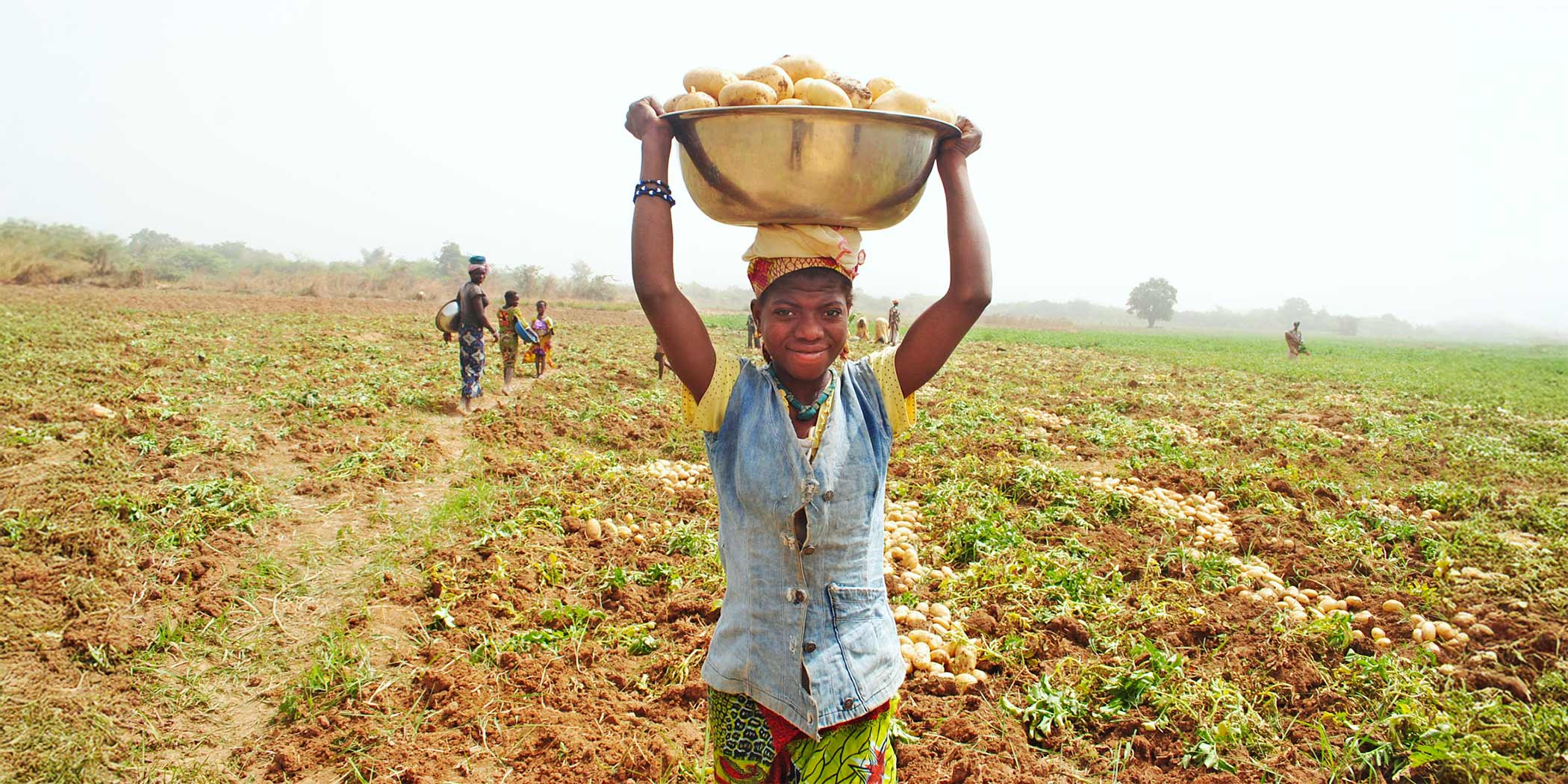
Mozambique is located in southeastern Africa bordered by the Mozambique Channel, with South Africa to its south and Tanzania to its north. The country’s total land area is 799,380 sq km. In comparison, it is slightly larger than Pakistan, and twice the size of the state of California in the U.S. Its climate is tropical to subtropical. Of the total land area, only five percent is utilized for cultivated crops, while no measurable amount of the total land supports permanent crops such as fruit- and nut-bearing trees. The population of Mozambique is approximately 21.7 million, with 81 percent of the labor force involved in agriculture. Mozambique gained its independence in 1975, but being financially deficient, was one of the poorest countries in the region. In 1987, the government established a series of macro-economic reforms designed to stabilize the economy. These steps, combined with donor assistance and political stability, have led to dramatic improvements in the country's growth rate. As of 2008, the GDP for Mozambique was $19 billion, with an ongoing growth rate of about seven percent. Yet, with these successes, 70 percent of the population continues to live in poverty. Mozambique’s agriculture sector represents 24 percent of GDP, with primary exports of cashews, cotton and sugar. Other agricultural products include tea, cassava, maize, coconuts, sisal, citrus, tropical fruits, potatoes, sunflowers, beef and poultry. The East and Southern Africa Division is responsible for IFDC activities in Mozambique.

Current IFDC Projects in Mozambique

  • Toward Sustainable Clusters in Agribusiness through Learning in Entrepreneurship (2SCALE), 2012-2016
    2SCALE is improving rural livelihoods, nutrition and food security in Benin, Ethiopia, Ghana, Kenya, Mali, Mozambique, Nigeria, South Sudan and Uganda, with 1.15 million smallholder families ultimately increasing their productivity by 100 percent and their net incomes by 30 percent. A key component is the development of a portfolio of 500 robust and viable agribusiness clusters and value chains to supply food to regional, national and local markets and the least fortunate, also known as base-of-the-pyramid (BoP) consumers.

DONOR: The Netherlands’ Directorate-General for International Cooperation (DGIS)

  • Agricultural Input Market Strengthening (AIMS), 2006-2014
    Entering its third phase in October 2012, AIMS is strengthening private sector capacities to develop viable agro-input and output markets. The project is improving farmers’ access to technologies through competitive markets and dealer networks. AIMS is also strengthening the capacities of public sector partners to develop and transfer best practices for Commercialized Sustainable Farming Systems (CSFS), including conservation agriculture, that will improve smallholder farmer profitability. In addition, AIMS is assisting the Government of Mozambique and partners to develop policies and legislation needed for agriculture-led economic growth.

DONOR: U.S. Agency for International Development (USAID)

  • BASIS, 2009-2013
    This field experiment studies the relationship between farmer savings and sustainable food security. BASIS studies the impact of fertilizer subsidies; the interaction of fertilizer subsidies and savings; and the impact of savings facilities and savings matches. Key assessments include farm output, household consumption and other household indicators in the short- and long-term resulting from subsidies, savings and savings matches. BASIS is a collaboration of the University of Michigan, IFDC and the University of Wisconsin. In addition, Banco de Opportunidade de Mocambique (BOM) manages a credit fund for agro-dealers.

DONOR: U.S. Agency for International Development (USAID)

  • Cassava Plus, 2011-2013
    Cassava Plus is a public-private partnership (PPP) between IFDC and the Dutch Agricultural Development & Trading Company (DADTCO) to commercialize the cassava production of 1,500 households (6,000 people) in four districts of Nampula Province by linking them to markets more efficiently. The program assists farmers to more efficiently plant and harvest cassava, which is then processed utilizing a mobile processing unit. Cassava+ guarantees farmer payment for delivered cassava and includes access to quality agro-inputs, training and new technologies.

DONOR: DGIS/Schokland Fund


Recent IFDC Projects in Mozambique

  • Accelerating Agribusiness in Africa – Bridge (AAA-Bridge), 2011-2012
    The AAA-Bridge project was an extension of Strategic Alliance for Agricultural Development in Africa (SAADA-B) activities. The objective of AAA-Bridge was to expand IFDC activities and best practices developed in West Africa, such as the Competitive Agricultural Systems and Enterprises (CASE) solution, Integrated Soil Fertility Management (ISFM), fertilizer deep placement (FDP), fertilizer resource assessments and market information systems (MIS), into other regions of Africa. Specifically, this project expansion was designed to replicate the CASE approach and other aspects of the IFDC agribusiness model in select countries of eastern and southern Africa.
DONOR: The Netherlands’ Directorate-General for International Cooperation (DGIS)
 
  • Food and Agriculture Organization (FAO) Mozambique Voucher Program, 2009-2011
    In September 2009, IFDC received a grant from the European Union through FAO to assist the Government of Mozambique in the implementation of a fertilizer/seed voucher program pilot. The program initially targeted 25,000 maize and rice farmers. Upon the request of FAO, IFDC implemented an additional voucher program in Mozambique from 2010 to 2011, funded by the European Union.

DONOR: European Union

  • Maize Intensification in Mozambique (MIM), 2008-2012
    MIM assisted smallholder farmers to increase maize production through better access to quality agro-inputs and specialized training programs. MIM strengthened the entire maize value chain by building linkages between farmers and agro-dealers, maize buyers, NGOs, farmers’ organizations and agricultural extension services. The project utilized farmer cluster formation and demonstration fields to promote improved technologies through innovative fertilizer and conservation agricultural techniques.

DONORS: International Fertilizer Industry Association (IFA), International Plant Nutrition Institute (IPNI), International Potash Institute (IPI)

  • Mozambique Agro-Dealer Development (MADD), 2009-2012
    The MADD project built on the achievements of the AIMS project, which promotes private sector investment in agro-input technologies and improves farmers’ access to these technologies through competitive markets and stronger agro-dealer networks. MADD added to these efforts, strengthening and expanding agro-dealer networks in two provinces in central Mozambique. MADD assisted more than 400 agro-dealers. The project worked closely with fertilizer companies and other partners such as AgriFuturo (USAID) and CLUSA, as well as local organizations to enhance privatization.

DONOR: Alliance for a Green Revolution in Africa (AGRA)

  • Strengthening Trade at the Regional Level in Agricultural Inputs in Africa (STAR), 2007-2010
    The STAR project promoted food security and agricultural growth through improved regional trade along eastern and southern Africa’s entire agricultural vale chain. The project improved market access for agro-dealers and smallholder farmers. This included better access to quality inputs and advanced technologies along with improved market linkages, local and regional agricultural policy reforms and greater involvement of agricultural enterprises.

DONOR: The William and Flora Hewlett Foundation


Mozambique Information

Mozambique Brochure


Mozambique Articles

Core Competency: Partnerships Generate Progress and Sustainability Taken from IFDC Report Volume 36, No. 3


an IFDC Core Competency:Fertilizer Voucher ProgramTaken from IFDC Report Volume 36, No. 1


IFDC and Government of Mozambique Partner to Improve Food SecurityTaken from IFDC Report Volume 36, No. 1


An IFDC Core Competency: Agro-Dealer DevelopmentTaken from IFDC Report Volume 35, No. 3


Farmer Savings and Sustainable Food Security in Mozambique Taken from IFDC Report Volume 35, No. 2


Mozambique Videos

Mozambique and IFDC – Working Together to Improve Agriculture and Lives