CATALIST-Uganda

Overview

IFDC will utilize the successes and lessons learned from the CATALIST agricultural intensification project in Central Africa’s Great Lakes Region to help improve Uganda’s agriculture sector. The four-year CATALIST-Uganda project is funded by the Netherlands’ Ministry of Foreign Affairs through the Embassy of the Kingdom of the Netherlands and began on July 1, 2012.

Agriculture is the mainstay of the Ugandan economy, providing 22 percent of the gross domestic product, 85 percent of export earnings, 73 percent of employment and the bulk of raw materials used by the industrial sector. Despite more than a decade of positive political, economic and social change, 65 percent of the population continues to earn less than $2/day and over 90 percent of the poor reside in rural areas. Uganda is also challenged by an annual population growth of 3.6 percent (among the highest in the world).

Although agriculture is critical to the national economy, overall yields have not increased over the past decade and are far below their potential. This is compounded by small farms that limit adoption of better agricultural practices and mechanization. So, improved agricultural practices and marketing channels offer the best opportunities to spur economic growth for the millions of rural households in the country.

With an increasing population and increasingly smaller farms, growth in agricultural production requires a substantial increase in productivity per land unit. Organic and inorganic nutrient input use is low, resulting in soil degradation; yields and farmer incomes are low; and costs per crop unit are high. Additionally, Uganda’s agro-input and output markets are marked by high transactional costs and poor integration. The majority of farm households lack: the means or incentive to invest in their farms; skills in commercialized production technologies; and links to output markets to sell surplus production. As a result, farmers remain trapped in a poverty cycle, ‘mining’ their soils of nutrients to produce low yields, with little marketable surplus.

Achieving Greater Productivity

However, Uganda has the potential to become a food-exporting country because of its favorable climate and its central position in a food-insecure region. Again, achieving this potential will require substantial increases in productivity per land unit. Only through better access to services and agro-inputs (fertilizers, improved seeds and crop protection products) and better market connections can smallholder farmers accomplish this goal.

Agricultural intensification must be linked with market integration. Farmers need to be integrated into effective agribusiness clusters through which they can aggregate and sell surplus crops. The resulting economic improvements are also necessary to create non-farm employment for the growing rural population.

CATALIST-Uganda will help increase productivity and more effectively link farmers to input and output markets by improving value chains. Value chains link the numerous steps that a commodity takes from the farmer to the ultimate consumer.

While the project will focus on a few key commodities, it will promote a systems approach to anchor these commodities into crop rotations and (where possible) integrate them with livestock systems. The project also will seek to maximize farm income and sustain/improve soil nutrient availability and soil organic matter content. The goal of CATALIST-Uganda is to sustainably commercialize smallholder agriculture through improved productivity and market development.

The CATALIST Approach

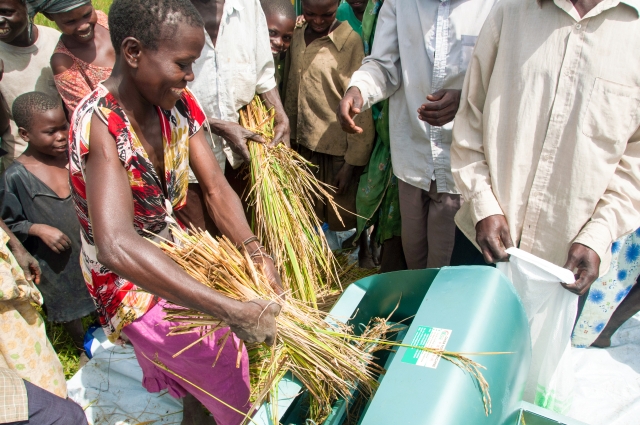
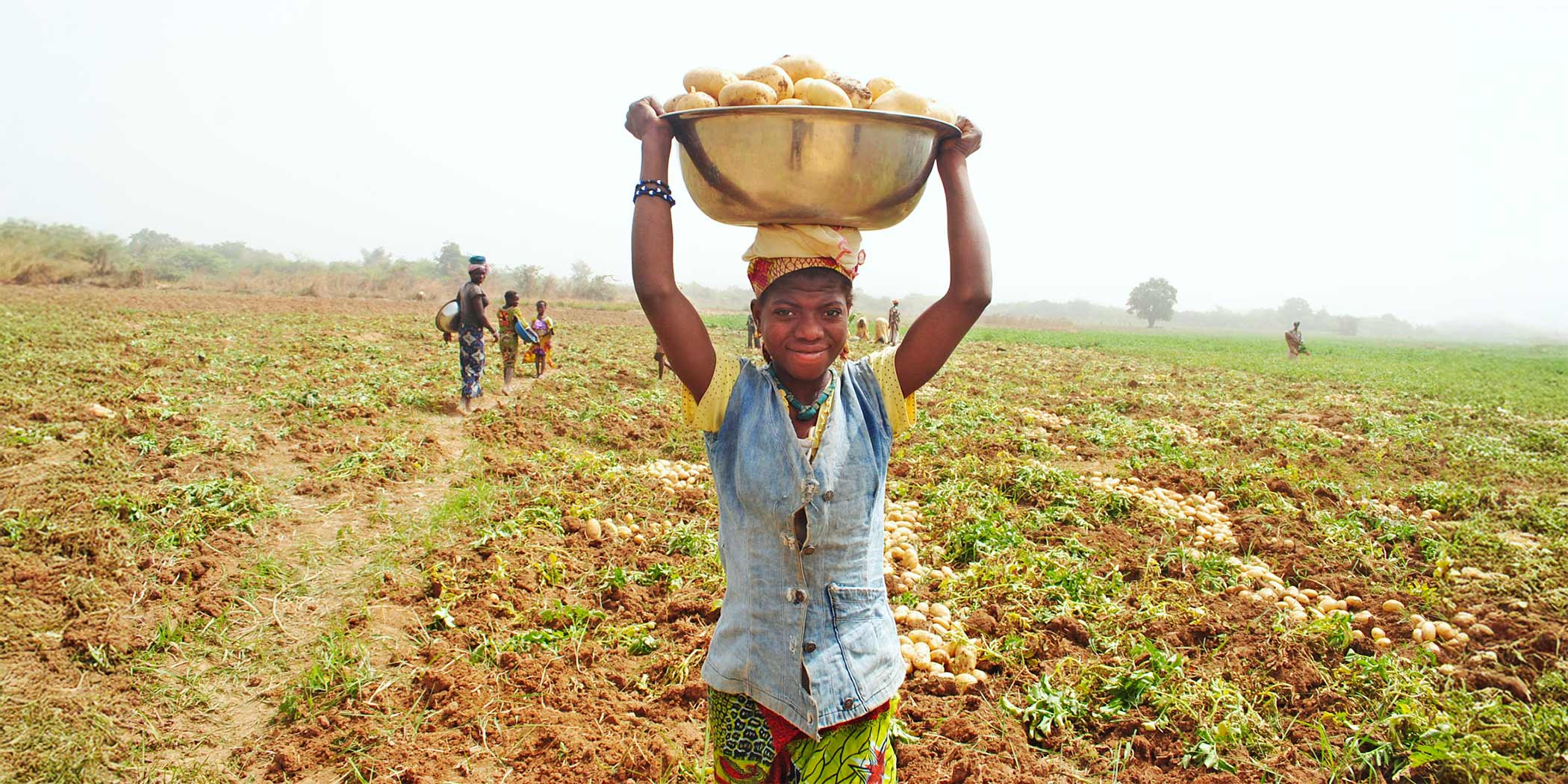
CATALIST-Uganda will focus initially on four crops with established national and regional markets (Irish potatoes, lowland rice, cassava and sunflowers). Having established markets means that production increases are unlikely to cause lower prices. Potato and rice yields are particularly low relative to their potential, so productivity increases and production cost decreases can be obtained with increased use of agro-inputs and good crop husbandry. While cassava is traditionally cultivated as a food security crop, large commercial markets have been identified. With better production and post-harvest processing techniques, cassava can be very profitable. The sunflower oil and seed value chains are already well-developed; a relatively small investment in commercialized production practices could greatly improve profitability for farmers and reverse soil degradation. Legumes (groundnuts, soybeans, beans and pigeon peas) are complementary rotational crops and can contribute to farmers’ incomes. Moreover, a balanced mix of commodities and markets reduces the risks of reliance on a narrow commodity income base.

The project will be built on a market-driven approach, developing competitive value chains (pull) and farming systems (push) that will lead to increased marketable surpluses. To reduce production and transaction costs in the supported value chains, CATALIST-Uganda will introduce technical and institutional innovations to increase profitability. Through the project, IFDC will focus on building and strengthening the capacities of such partners as farmer organizations, agro-dealers, agribusinesses and business service providers to ensure institutional sustainability.

Adapting IFDC Innovations to Benefit Uganda

Taking advantage of the existing modest surplus production and nascent rural business linkages, the project will accelerate agribusiness cluster development, while also introducing commercially and environmentally sustainable farming systems. IFDC will help develop markets using its Competitive Agricultural Systems and Enterprises (CASE) approach.

As part of CASE, Commercialized Sustainable Farming Systems (CSFS) seek to optimize profits from crops (and potentially livestock) in the farming system, while simultaneously sustaining/improving soil health. This is accomplished by maximizing synergies between agro-inputs, cropping sequences (rotations/intercrops) and livestock (if present). Together, CASE and CSFS ensure that tradable surpluses are both commercially and environmentally sustainable, and that the resulting production systems are embedded in a network of business relationships that add value not only directly to the farmer but to the wider rural and national economies as well.

A related CASE component is integrated soil fertility management (ISFM), a key to increasing agricultural productivity while protecting the environment and maintaining (or even enhancing) the soil resource base. ISFM strategies center on the combined use of mineral fertilizers and locally available organic amendments (crop residues, compost and green manure) to replenish lost soil nutrients and improve both soil quality and the efficiency of agro-inputs and water. In addition, CSFS and ISFM maximize agricultural management choices (e.g., soil organic matter management, tillage practices, leaching and erosion control) in an environmentally sustainable manner.

Gender will be a particular focus; CATALIST-Uganda will promote equitable access to resources and economic returns and shared household decision-making. In addition, the project’s focus on improved post-harvest handling, storage and market linkage through a matching investment fund and credit guarantees will increase farmers’ financial options. With links to agro-dealers, processors, business service providers and market information, farmers can take advantage of new and expanding markets, a strong motivator to produce a surplus. An innovation grant fund (to spur new options for input and output market development) and a public works component (to generate rural employment through the development of infrastructure that enhances productivity and market access) will support project interventions.

CATALIST-Uganda targets farmers that own or have access to more than 1 hectare, have productive assets, can accept a certain level of risk and can access markets. Medium- to large-scale farmers in target areas may serve as nucleus farmers. However, all farmers (including those not targeted) will benefit from the public works component, which can assist in asset accumulation. CATALIST-Uganda will reverse low fertilizer use by working with agro-dealers, extension services and financial institutions to enable farmers to access and profitably apply fertilizers.

In summary, by the end of CATALIST-Uganda, 100,000 smallholder farmers will have doubled yields, achieved a 50 percent increase in incomes and produced annual marketable surpluses of 200,000 metric tons. These surpluses will contribute to increased rural incomes and trade in Uganda and increased regional food security.

Updated October 2012

CATALIST-Uganda Information


CATALIST-Uganda Press Releases

IFDC Launches CATALIST-Uganda


CATALIST-Uganda Brochure