CATALIST: Catalyze Accelerated Agricultural Intensification for Social and Environmental Stability

CATALIST Project in the Great Lakes Region of Central Africa

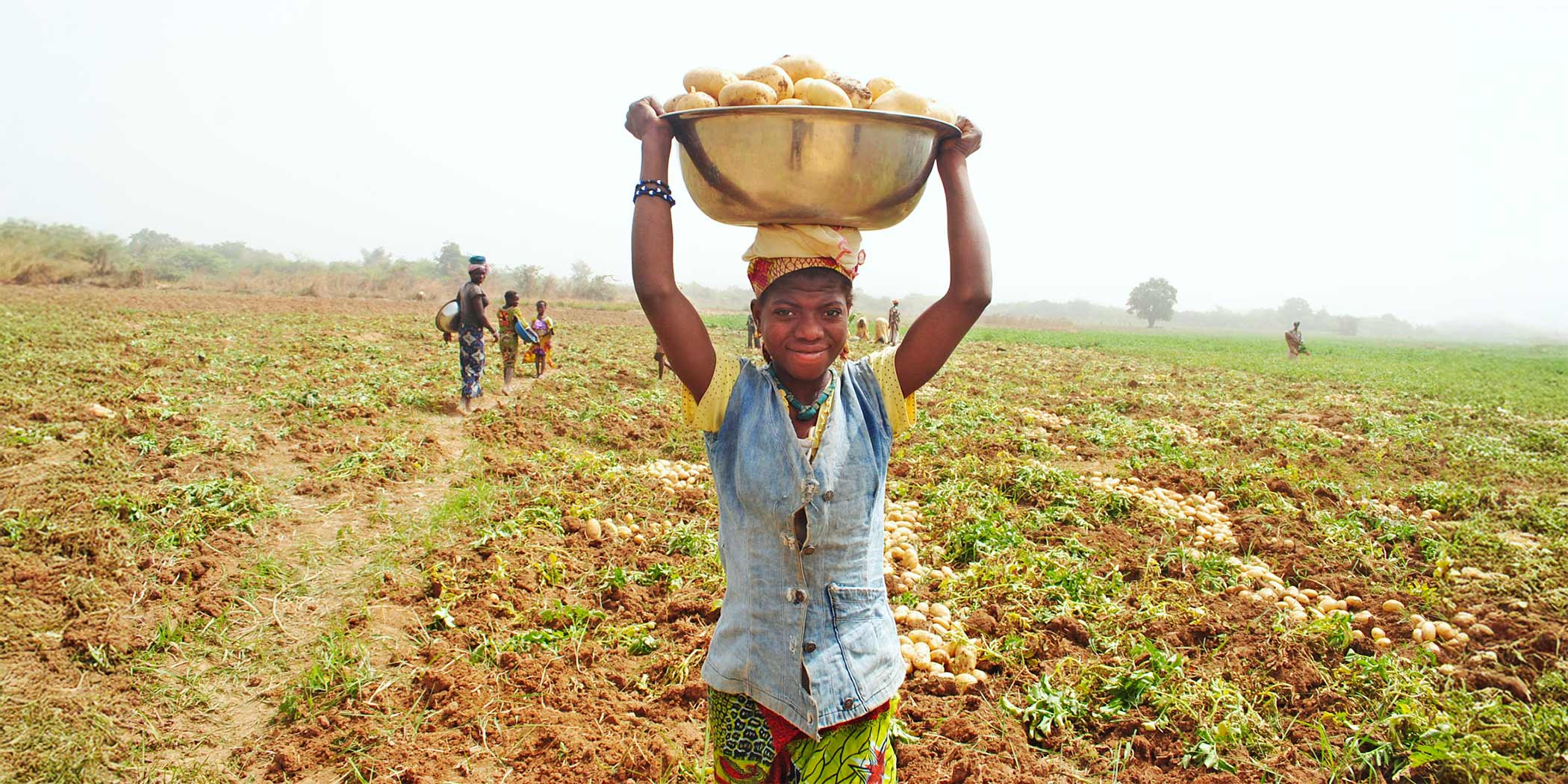
Millions of people suffer from food insecurity in Central Africa’s Great Lakes Region (CAGLR), due to low agricultural productivity. Through CATALIST, IFDC worked to improve social and environmental stability in CAGLR by speeding up broad-scale agricultural intensification, which contributed to poverty reduction, food security and economic development.

With funding from the Netherlands’ Ministry of Foreign Affairs’ Directorate-General for International Cooperation (DGIS), this five-year project began in October 2006 and ended in 2012. CATALIST-2 (2012-2016) will build on CATALIST activities in the region.

Project oversight was provided by the Embassy of the Kingdom of the Netherlands in Rwanda. The project, based in Kigali, Rwanda, had satellite offices in Burundi and eastern Democratic Republic of Congo (DRC). One-third of the project funding was sub-granted to Helpage, a national non-governmental organization (NGO), and to other organizations.

The objectives of the project were to:

  • Promote the intensification of sustainable agricultural production
  • Strengthen farm-to-market linkages
  • Expand marketing opportunities for agricultural products
  • Promote the improvement of regional economic collaboration

Activities were targeted to increase agricultural productivity (crop and livestock) and to develop associated agricultural input and output markets, which helped vulnerable population groups, including demobilized soldiers, internally displaced and returnee populations, by creating jobs and developing local economic exchange. This three-pronged approach addressed a principal cause of regional instability – farmers’ inability to provide for their families due to land degradation resulting from overpopulation and a reliance on low-input agriculture.

CATALIST supported Helpage activities in three countries, resulting in nursery production of more than three million agroforestry plants, establishment of 840 hectares of agroforestry plantations and improvements on 182 kilometers of feeder roads. These activities generated part-time employment for 13,500 people and injected about $350,000 into local economies.

The project implemented critical input and output market assessments within the region, initiated participatory field testing of external input packages with 900 farmers and established strong working relationships with key public and private sector officials in the host countries. The project targets included: adoption of improved production systems by 225,000 farmers whose yields should increase by 60 percent or more than 200,000 metric tons; 40 percent growth in trade in agricultural produce; doubling of business by more than 400 local input dealers and services and environmentally sustainable production on an additional 170,000 hectares of farmland.

Urea deep placement (UDP) was introduced as an improved technology to support agricultural intensification, particularly for lowland rice. CATALIST also implemented testing of a new slow-release fertilizer on vegetable crops in Burundi and Rwanda in collaboration with Agrium.

Collaboration was initiated with two major processors to intensify rice and wheat production in South Kivu, DRC. Technical and financial sponsorship of participatory field tests in Burundi, DRC and Rwanda was also implemented. Technical support included provision of improved fertilizer recommendations and regional training on soil fertility improvement and maintenance via Integrated Soil Fertility Management (ISFM).

CATALIST enabled farmers to increase their production and incomes through an integrated approach that combined sustainable agricultural intensification technologies with farm-to-market linkages, establishment of agroforestry and road infrastructure construction.

CATALIST Information

CATALIST Project Summary

View on iPad or iPhone

Download CATALIST Project Summary


CATALIST Workshop, June 28-29, 2011: La Sécurité Alimentaire Congolaise est-elle Nécessaire et Possible?


Articles

IFDC to Increase Agricultural Productivity in Great Lakes Region (Published by Xinhua)

IFDC Core Competency: Gender Equity is Key to Feeding the Hungry


Dutch State Secretary of Foreign Affairs Visits CATALIST Project Sites in Rwanda and Democratic Republic of Congo (Taken from IFDC Report Volume 36, No.2)


An IFDC Core Competency: Fertilizer Voucher Programs (Taken from IFDC Report Volume 36, No.1)


CATALIST Project Promotes Inventory Credit System in the Great Lakes Region of Central Africa (Taken from IFDC Report Volume 36, No.1)


CATALIST and SEW Projects Educate with New Video (Taken from IFDC Report Volume 36, No.1)


CATALIST Project Marks Accomplishments in 2009 (English and French) (Taken from IFDC Report Volume 35, No.1)


CATALIST Road Rehabilitation: An IFDC/Helpage Partnership (English and French) (Taken from IFDC Report Volume 35, No.1)


Videos

CATALIST - Nourishing Soil and Stability: A Farming Revolution in the Great Lakes Region of Africa

Television News Coverage - Signing of MoU (English)

Television News Coverage - Signing of MoU (French)

News Coverage - Signing of MoU (Kinyarwanda)

Inventory Credit System - English Captions

Inventory Credit System - French Captions

Press Releases

Rice Cooperative Receives Loan Through Inventory Credit System


Dutch Foreign Affairs Secretary of State Visits CATALIST’s Field Activities in Rwanda


Dutch Secretary of State Visits the Sake-Kitshanga Road


CATALIST Newsletter - English and French Versions


CATALIST Brochure - English and French Versions


CATALIST Country Overview Reports

Burundi (French)


DRC (French)


Rwanda (English)