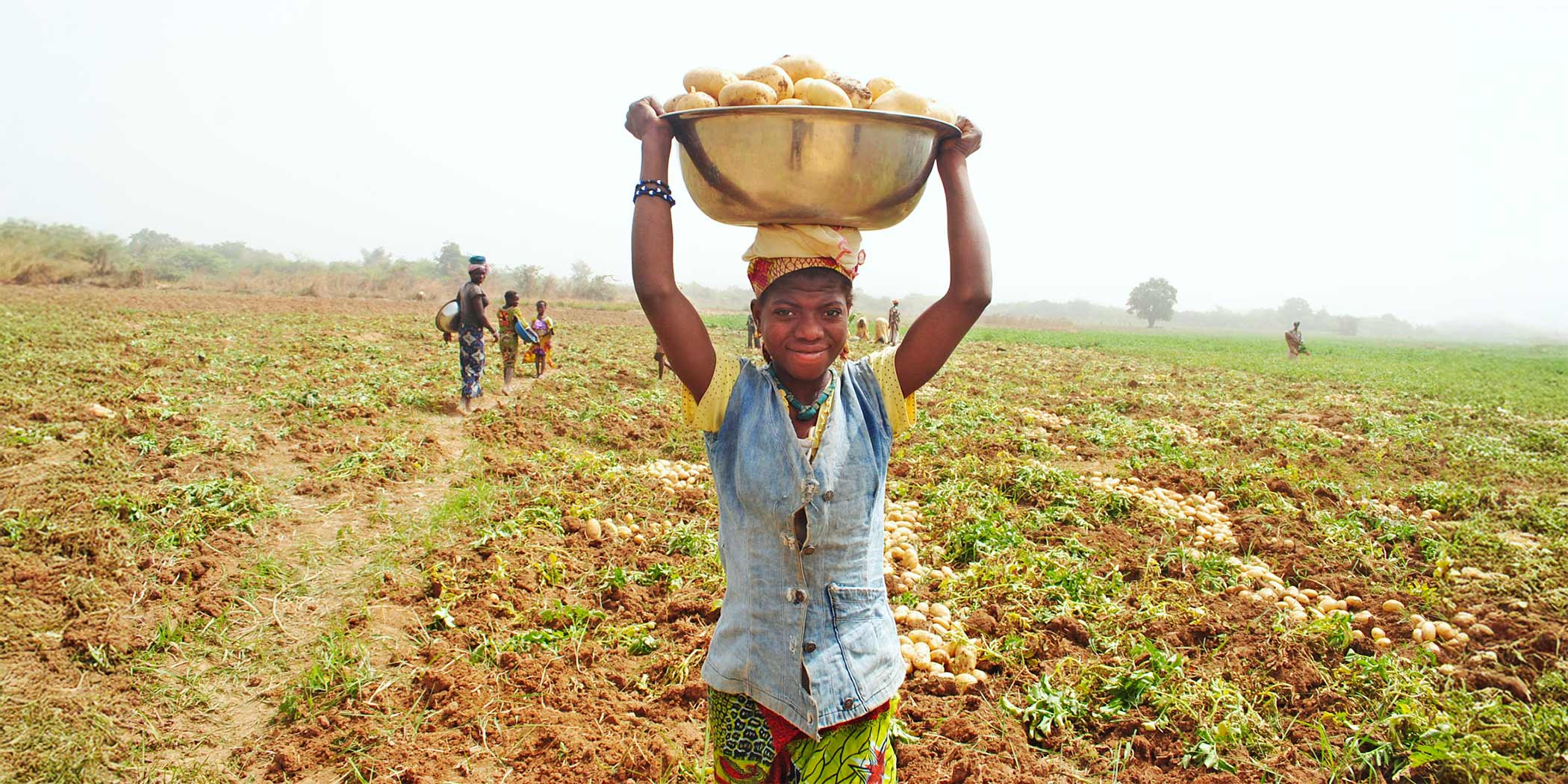
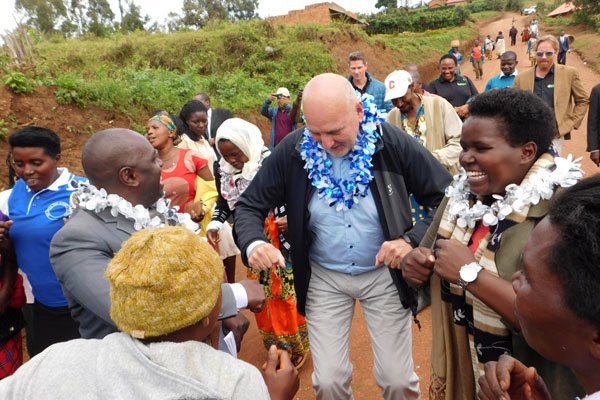
Uganda is located in East Africa, bordered by Kenya to its east and DRC to its west. The country’s total land area is 421,038 sq km. Comparatively, it is slightly smaller than the United Kingdom, or about the size of the state of Oregon in the U.S. Its southern climate is tropical, with an environment that is generally rainy with two dry seasons. Conversely, Uganda’s northeastern region is semiarid. Of the total land area, 22 percent is utilized for cultivated crops, while another nine percent supports permanent crops such as fruit- and nut-bearing trees. Environmental issues facing Uganda include draining of wetlands for agricultural use, deforestation, overgrazing and soil erosion. The country’s population is approximately 32.4 million, with more than 80 percent of Uganda's workforce dedicated to agriculture. Economically, the country has experienced sound GDP growth through agriculture due to government reforms and sound management, yet 35 percent of its people continue to live in poverty. Uganda’s primary export is coffee, representing a substantial portion of the agriculture sector GDP. Other agricultural products include tea, cotton, tobacco, cassava, potatoes, maize, millet, pulses, cut flowers, beef, goat meat, milk and poultry. The East and Southern Africa Division is responsible for IFDC activities in Uganda.
Recent IFDC Projects in Uganda
- Accelerating Agribusiness in Africa – Bridge (AAA-Bridge), 2011-2012
The AAA-Bridge project was an extension of Strategic Alliance for Agricultural Development in Africa (SAADA-B) activities. The objective of AAA-Bridge was to expand IFDC activities and best practices developed in West Africa, such as the Competitive Agricultural Systems and Enterprises (CASE) solution, Integrated Soil Fertility Management (ISFM), fertilizer deep placement (FDP), fertilizer resource assessments and market information systems (MIS), into other regions of Africa. Specifically, this project expansion was designed to replicate the CASE approach and other aspects of the IFDC agribusiness model in select countries of eastern and southern Africa.
- COMESA Regional Agricultural Inputs Program (COMRAP), 2010-2011
COMRAP responded to rising food prices by increasing agricultural productivity through improved access to finance, training, fertilizer and seeds. Over the course of its implementation, the project targeted three million smallholder farmers in Burundi, Ethiopia, Malawi, Rwanda, Swaziland, Uganda, Zambia and Zimbabwe. COMRAP was implemented by the Alliance for Commodity Trade in Eastern and Southern Africa (ACTESA).
DONOR: The European Union Food Facility Program
- Extending Agro-Input Dealer Networks (EADN) in East Africa, 2008-2011
EADN strengthened and extended agro-dealer capacities in Kenya, Tanzania and Uganda. The project focused on building well-functioning dealer networks that can support the introduction of improved production technologies to smallholder farmers. The project also focused on improving agro-dealer promotion and distribution capabilities for products such as quality fertilizers, improved seed and crop protection products.
DONOR: International Fund for Agricultural Development (IFAD)
- Livelihoods and Enterprises for Agricultural Development (LEAD), 2008-2013
LEAD is helping to raise rural agricultural productivity and incomes for smallholder farmers in Uganda, providing support to targeted smallholders who grow food and cash crops. Utilizing the value chain approach to agricultural development, the project improves productivity through training and access to quality agro-inputs, and increases trade capacity and market competitiveness by building better market linkages.
DONOR: U.S. Agency for International Development (USAID)
- Strengthening Trade at the Regional Level in Agricultural Inputs in Africa (STAR), 2007-2010
The STAR project promoted food security and agricultural growth through improved regional trade along eastern and southern Africa’s entire agricultural vale chain. The project improved market access for agro-dealers and smallholder farmers. This included better access to quality inputs and advanced technologies along with improved market linkages, local and regional agricultural policy reforms and greater involvement of agricultural enterprises.
DONOR: The William and Flora Hewlett Foundation

Uganda Information
Articles
IFDC Core Competency: Gender Equity is Key to Feeding the Hungry (Taken from IFDC Report Volume 36, No.4)
Over 4,500 Agro-Dealers Trained Through COMRAP Project (Taken from IFDC Report Volume 36, No.2)
Extending Agro-Input Dealer Networks (EADN) (Taken from IFDC Report Volume 36, No.1)
An IFDC Core Competency: Agro-Dealer Development (Taken from IFDC Report Volume 35, No.3)
New Agro-Dealer Development Project: COMESA Regional Agricultural Inputs Program (COMRAP) (Taken from IFDC Report Volume 35, No.3)
An IFDC Core Competency: Agro-Dealer Development (Taken from IFDC Report Volume 35, No.3)
Project Highlight: Extending Agro-Input Dealer Networks (EADN) (Taken from IFDC Report Volume 35, No.2 in English and French)