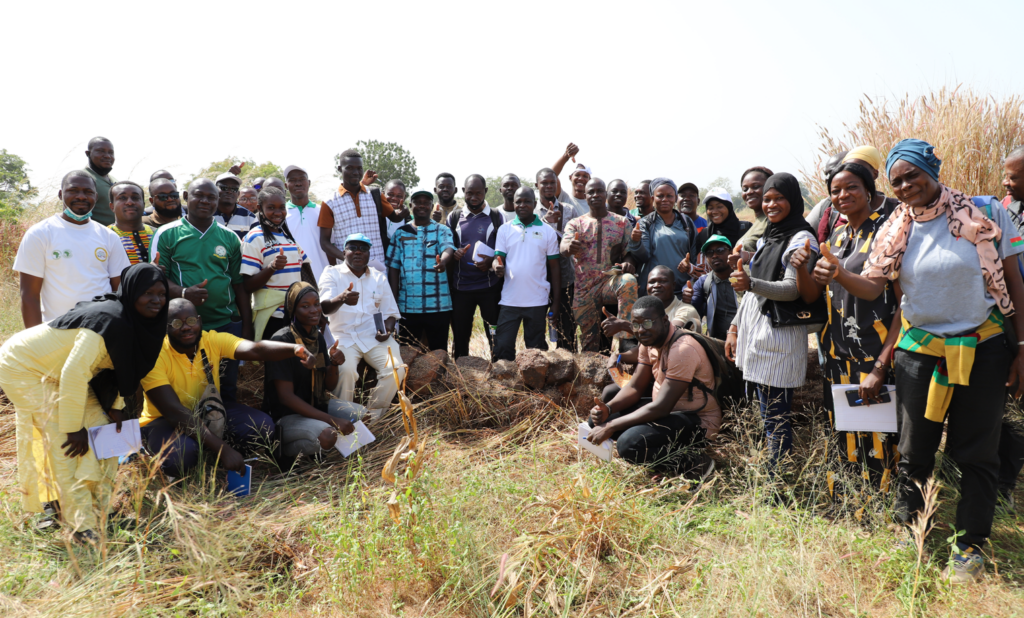
Soil Values, a 10-year program funded by the Netherlands Directorate-General for International Cooperation, aims to reclaim 400,000 hectares of degraded land in Burkina Faso through integrated soil fertility management (ISFM) practices. To this end, a training program on ISFM technologies was held November 18-22, 2024, in Bobo-Dioulasso. This is the first in a series of cascading trainings initiated by the Soil Values program.
The participants in the course comprised 35 agricultural technicians, including 30% women and 46% young people, all operating in the Kou and Lower Mouhoun watersheds. These participants were identified by the West Africa Food System Resilience Program (FSRP) and the Ministry of Agriculture, Animal Resources and Fisheries (MARAH).
The training took place in two phases, a theoretical phase in the classroom and a practical phase in the field. Each trained technician is expected to pass on their knowledge to 25 producers, particularly local agro-pastoralists, who in turn will relay this training to other small-scale producers.
“The training was relevant and beneficial. We are ready to strengthen the capacity of producers, who will learn new technologies from us.”
Zalissa Sanou-Ouango, agricultural technician in Noumoudara
This training was initiated as a follow-up to an assessment carried out in July 2024 in the Kou watershed, which highlighted the need for strengthening the technical capacity of agricultural technicians and local producers on ISFM. The training is designed to enhance the knowledge of extension agents on innovative climate-adaptive technologies that can improve soil fertility and soil health in watersheds.
Participants in the training have been involved in various partner programs and projects, such as the West Africa Food System Resilience Program (FSRP), Agriculture Resilience and Competitiveness Project (PReCA), the Regional Pastoralism Support Project in the Sahel Phase II (PRAPS II), and the Regional directorates of the MARAH of Hauts-Bassins and Boucle du Mouhoun.
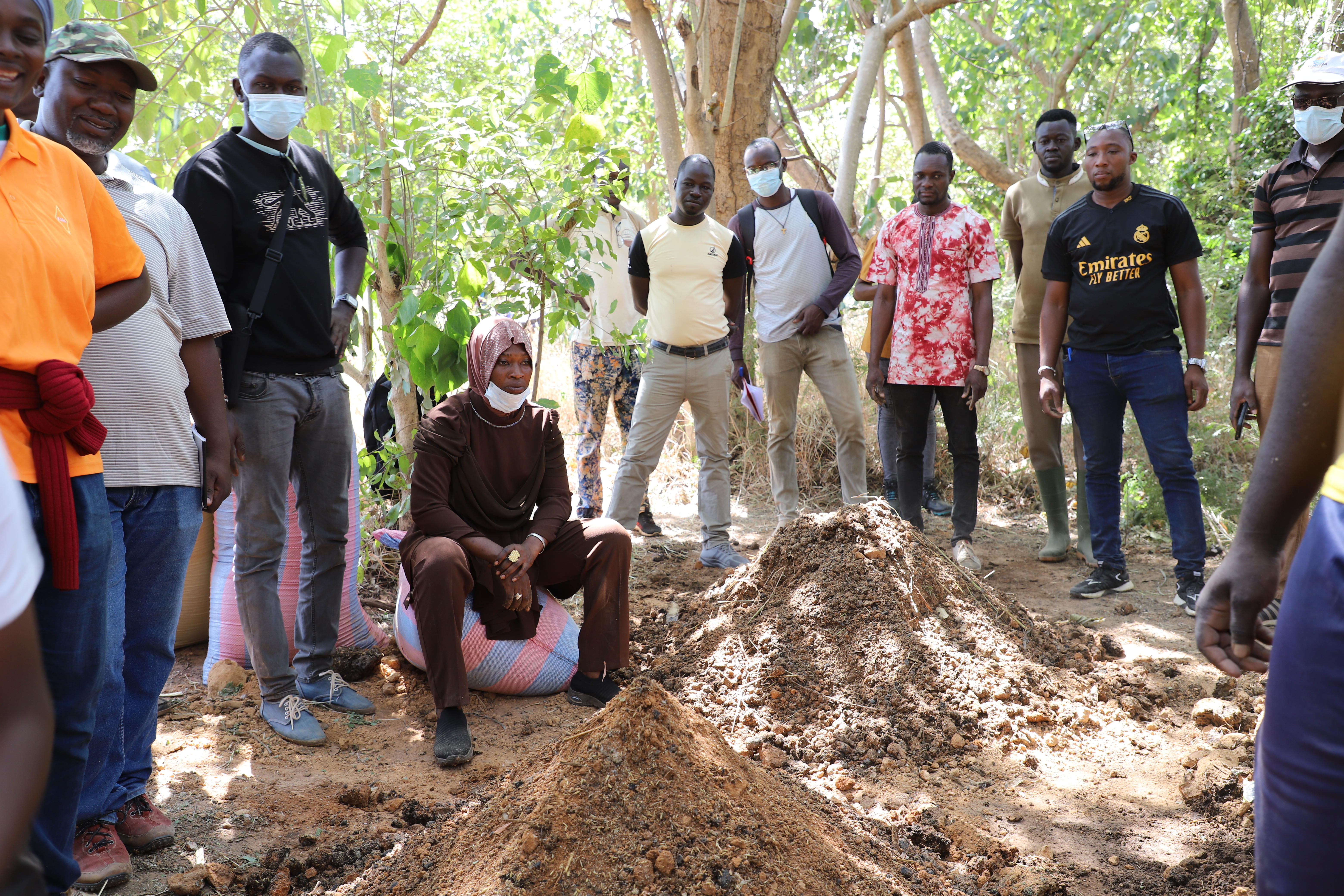
The training used a participatory approach, encouraging dynamic interactions between the trainer and participants. It consisted of collective reflection on the implementation of technologies on a larger scale while integrating local specificities. This informed adaptation of the modules to fit field realities.
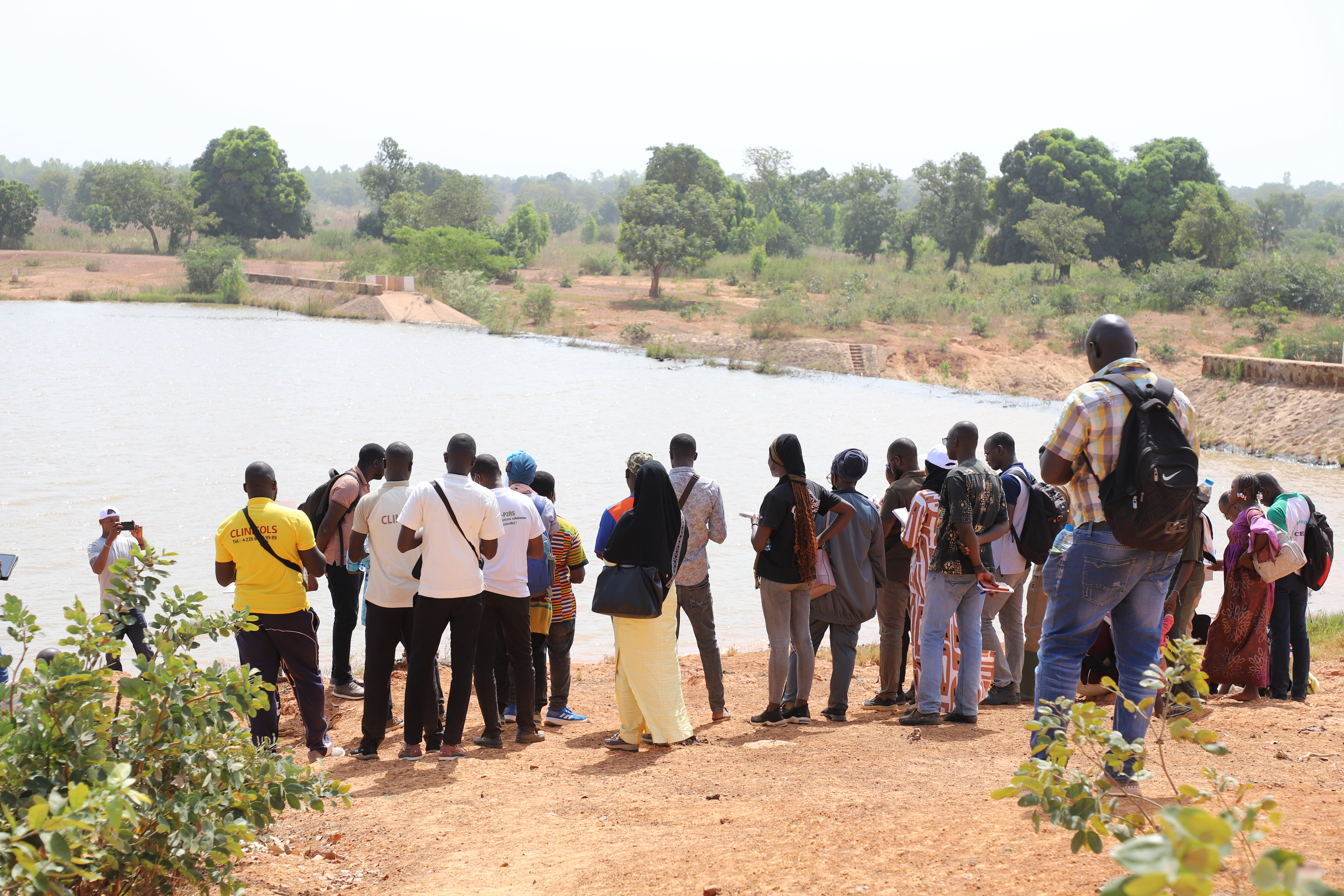
The interactive approach allowed for a discussion of soil fertility management in a watershed, a geographical area where all rainwater or other precipitation flows toward the same drainage point, known as an outlet. Participants learned that sustainable watershed management is essential to preserve agricultural land and ensure an equitable distribution of water resources. It starts from the individual farmer’s field to intercommunity and national spaces.
With this in mind, the training focused on technologies adapted to the local context to reduce agricultural land degradation in watersheds and improve the resilience of agroecosystems.
Several soil and water conservation (SWC) and soil defense and restoration (SDR) technologies were covered. For example, the development of stone bunds and contour line dikes was detailed, with particular emphasis on:
- Mastery of calculating the volume of rubble, which is often seen as a barrier to the adoption of this technology.
- Identification of alternatives to rubble.
- Use of specific tools to ensure accurate installation.
Additionally, the integration of grassy strips along stone barriers was noted to be an effective solution to slow runoff, stabilize structures, and improve water infiltration. Mulching was also presented as a beneficial practice for protecting the soil from evaporation and erosion while building biodiversity.
Other complementary techniques, such as half-moons, assisted natural regeneration, and zaï, were discussed as essential means of combating desertification and restoring degraded land. The use of improved compost was highlighted for its ability to enrich fertility and revitalize soil health through the addition of organic matter.
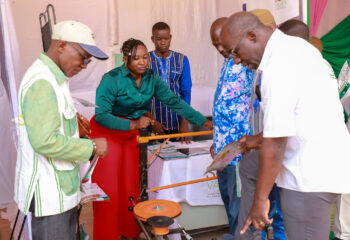
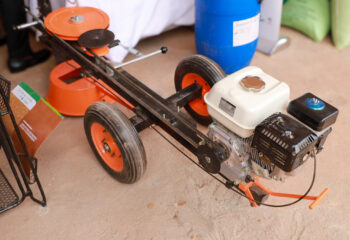
Although some techniques have proved to be effective, adoption remains low due to the labor-intensive nature of the work involved. One such technique is zaï, which involves digging small pits, adding manure and compost, and planting seeds to concentrate water and nutrients, thus promoting crop growth in dry conditions. The “Zainer,” a mechanized piece of equipment that facilitates the production of zai, was presented as a way to ease this laborious work.
The agents then discussed the selection of model seed producers and techniques for identifying nutritional deficiencies in plants in order to integrate them into a holistic and sustainable approach to agricultural land management.
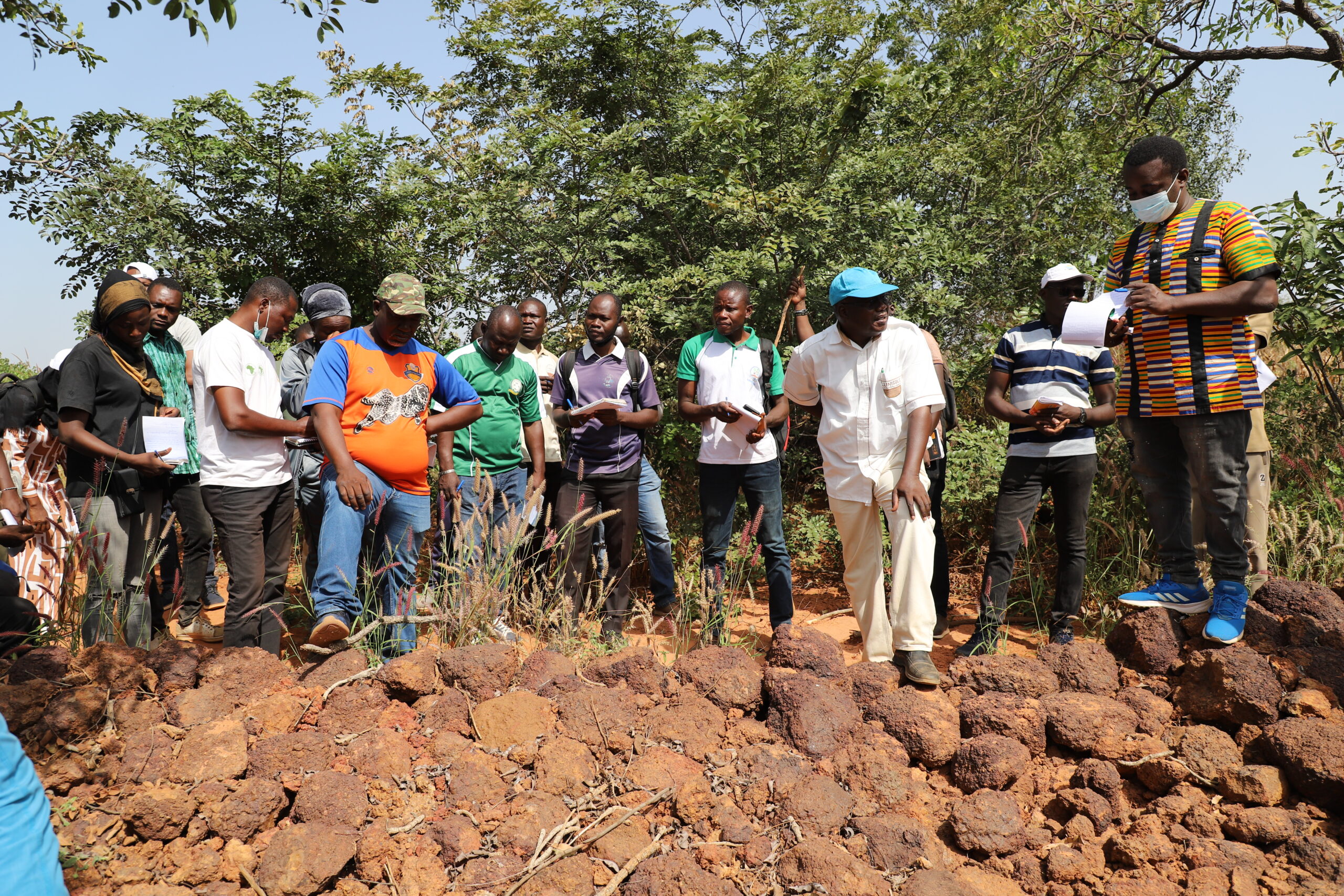
The next phase of the training program was devoted to practical exercises at the sites of the National Agricultural Training School of Matourkou (ENAFA) and the Institute of the Environment and Agricultural Research (INERA) at West Farako-Bâ.
Participants applied the knowledge acquired through:
- Creation of a transect, which made it possible to establish the profile of the watershed of the ENAFA site.
- Formation of stone ridges following the contour lines using tools for limiting differences in the level.
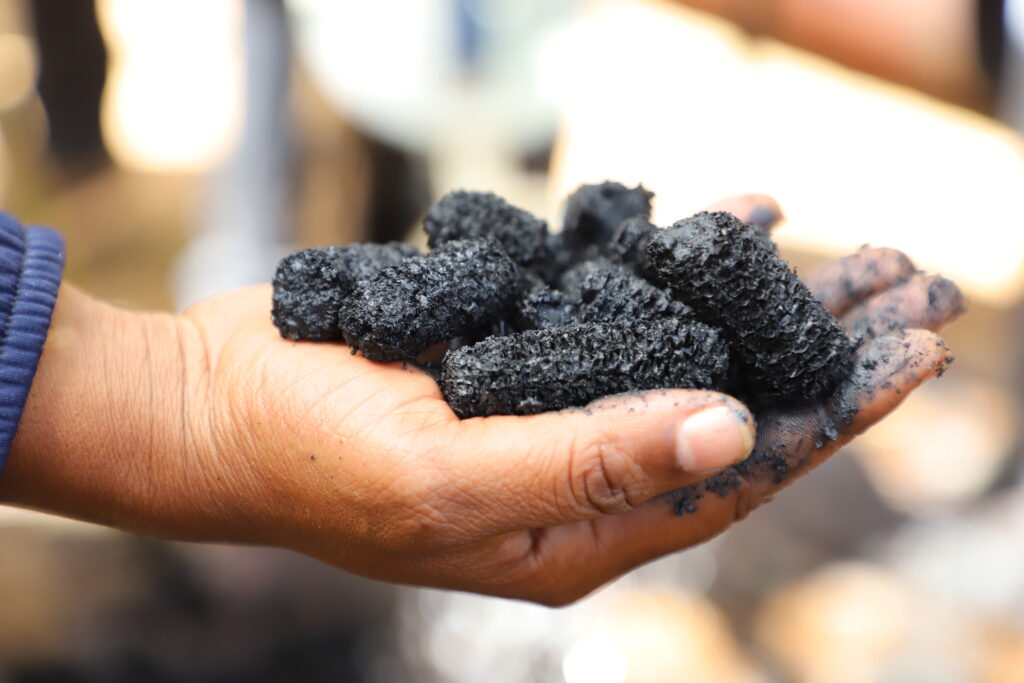
- Practical implementation of compost production techniques, such as heap composting, bokashi, and biochar.
These practical training sessions enabled the technicians to strengthen their technical knowledge of practices that will have an impact on their field interventions, particularly the training of relay producers and effectively supporting producers in the adoption of technological practices adapted to the local context.
In the next stage, each trained agent will transfer the knowledge gained to at least 25 relay producers, with particular attention on the inclusion of women and youth, particularly local agro-pastoralists, who in turn will relay this training to other small-scale producers.
Mariam Bambara-Balima, Gender Equality and Social Inclusion Advisor, emphasized the importance of active participation by all types of people: “Collaboration between different stakeholders is essential to improve agricultural productivity and strengthen the impact of initiatives.”
This inclusive approach aims to sustainably strengthen local capacities and promote the equitable transmission of knowledge.
Zalissa Sanou-Ouango, an agricultural technician in Noumoudara and a participant in the training, highlighted the importance of this initiative: “The training was relevant and beneficial. … We are ready to strengthen the capacity of producers, who will learn new technologies from us.”
Soil Values will provide on-the-ground support to ensure effective and successful training of relay producers, as well as appropriate and effective implementation of technologies. Simple educational tools will be used to facilitate the adoption of new practices.
Funded by the Dutch Directorate-General for International Cooperation (DGIS), the Soil Values program is being implemented over 10 years (2024-2033), led by the International Fertilizer Development Center (IFDC), in consortium with SNV and Wageningen University and Research (WUR), as well as knowledge partners such as AGRA, the Center for International Forestry Research and World Agroforestry (CIFOR-ICRAF), the International Institute of Tropical Agriculture (IITA), ISRIC – World Soil Information, and the International Water Management Institute (IWMI).